Pressure-Treated, Composite or Cedar: Choosing Decking for an Arkansas Backyard
Each decking material fits a different backyard, budget and tolerance for weekend maintenance.
October 6, 2026 · 4 min read
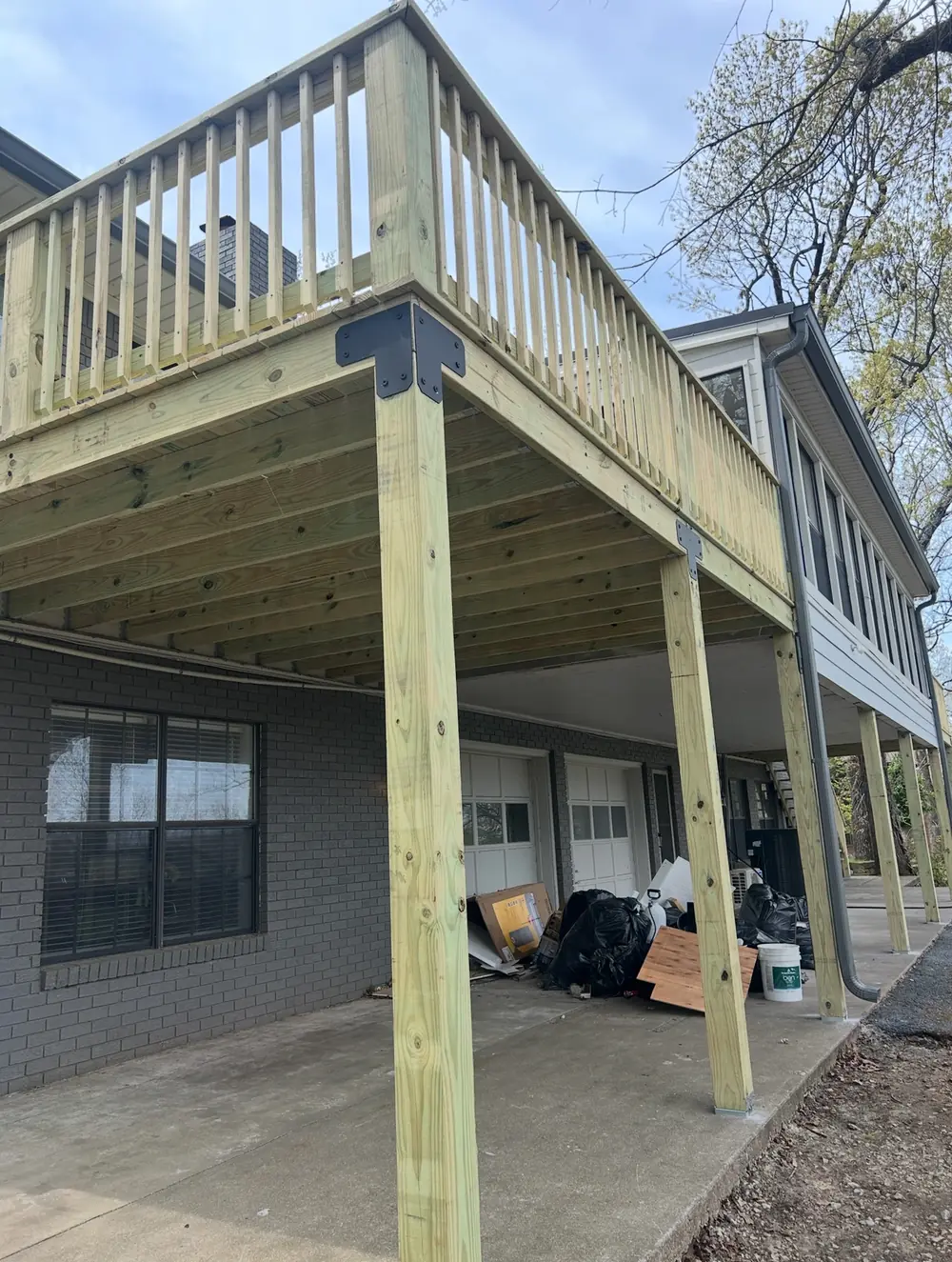
A deck in Northwest Arkansas lives a hard life. Summers are hot and humid, spring storms soak it, winter brings freeze and thaw, and the sun bakes the surface for months. The decking you pick decides how it looks in year one and how much work it asks of you in year ten. The three choices that come up most are pressure-treated lumber, composite and cedar.
Pressure-treated lumber
Pressure-treated wood is lumber, usually pine, that has had preservative forced deep into the fibers to resist rot and insects. It's the most common decking material because it's widely available and gives you the most deck for the money. It's also what you'll find under almost every deck, since the framing, posts and joists are usually treated lumber whatever you choose for the surface.
The trade-off is upkeep. Treated boards come wet from the yard and dry over the first months, and as they dry they can check, cup or twist a little. Plan on cleaning and sealing or staining on a regular schedule to slow weathering and keep the boards from graying and splitting. Do that and a treated deck lasts a long time. Skip it and it'll tell you.
Composite decking
Composite boards are manufactured from a blend of wood fiber and plastic, or from plastic alone, and they're made not to rot, splinter or need staining. You wash them once or twice a year, and that's about the extent of the care. They hold their color evenly and don't have the knots and grain variation of wood.
The trade-offs are real. The boards cost more up front. Dark colors can get hot enough in direct sun to be uncomfortable on bare feet in July. And the surface doesn't look like real wood up close, which matters to some people and not at all to others. Composite also needs the right fastening and spacing system, so it's worth hiring someone who has built with it before.
Cedar
Cedar is a naturally rot-resistant wood with a warm color and a pleasant, straight grain. It's lighter and gentler on bare feet than most alternatives, and it takes a stain beautifully. Many people choose it because it's the best-looking option on day one.
Left alone, cedar weathers to a soft silver gray, which some homeowners love. If you want to hold the original color, it needs a sealer or stain that's refreshed on a schedule. It's softer than the other two, so furniture and dropped tools leave marks more easily.
Side by side
- Pressure-treated: the lowest cost per square foot, needs regular sealing or staining, may check or cup as it dries
- Composite: the highest cost up front, the least upkeep, can run hot in full sun
- Cedar: the warmest look, naturally rot-resistant, softer surface, needs finish to keep its color
None of these is the right answer for everyone. A shaded yard under oak trees pulls moisture and mildew onto any surface. A south-facing deck with no shade is a test of heat. A family that does not want to think about the deck after it's built leans toward composite. Someone who enjoys the annual ritual of re-staining may love cedar.
Beyond the boards
The surface is only part of a deck. The footings, posts and framing carry the load, and how the deck attaches to the house is one of the most important details. A ledger that isn't flashed properly will let water get into the wall behind it. Railings and stairs have to be built to be both safe and solid. Multi-level decks need careful planning so that each level drains and steps cleanly.
Permits and code requirements for decks vary by city and county, so ask your local building department what applies to your lot before work starts. A contractor who builds decks regularly will know the process and can handle it with you.
How JMI builds them
JMI Construction Group builds custom decks from simple ground-level platforms to multi-level entertainment decks with built-in features. They work in pressure-treated lumber, composite decking and cedar, and they design each deck to suit the architecture of the house and the way the family uses the yard, including railings, stairs and built-in seating. Their deck page lists permits and code compliance as part of the job.
Questions worth asking before you pick
- How much time do I want to spend on upkeep each year?
- How much direct sun does the deck get, and for how many hours?
- Will I be on it barefoot, with kids and pets?
- Who handles the permit, and what does the building department require?
- What will the framing underneath be made of?
If you're planning a deck, JMI Construction Group can help you weigh the three materials against your yard. See the custom deck page at /custom-deck or call (479) 544-2856.
JMI Construction Group LLC, (479) 544-2856
Call (479) 544-2856More articles
What to Do in the First 48 Hours After Hail or High Wind Hits Your Roof
The first two days after a storm decide how much damage you end up paying for, and most of the work happens before anyone climbs a ladder.
Why You Should Call a Contractor Before You File a Roof Insurance Claim
The first call you make after storm damage shapes everything that follows, and it works best when you already know what you're claiming.