Foundation Cracks and Sticking Doors: When to Get a Structural Assessment
Most cracks are cosmetic, but a few patterns tell you the house is moving, and those are worth having looked at.
October 6, 2026 · 3 min read
Every house settles. A hairline crack in the drywall in the first couple of years is normal, and a door that sticks in August and swings freely in January is usually just humidity. The trouble is that those same symptoms can also be the first sign that a foundation is moving. Knowing which is which can save you from ignoring a real problem or paying for a repair you don't need.
Signs that are usually harmless
Thin, hairline cracks in drywall or paint, especially near corners, often come from normal seasonal movement. So do cracks in a concrete garage slab that run in short, straight lines, since concrete shrinks as it cures. A door that sticks only in humid weather and eases off when the air dries is generally a wood-swelling issue, not a structural one.
Keep an eye on them anyway. A mark in pencil at each end of a crack with the date next to it shows within a few months whether it's growing.
Signs that deserve a closer look
- Stair-step cracks in brick or block that follow the mortar joints
- Cracks wider than a quarter inch, or that are wider at one end than the other
- Doors and windows that stick or won't latch in every season, not just summer
- Gaps opening between the wall and the ceiling, the floor or the trim
- Floors that slope, bounce or feel uneven when you walk across a room
- A chimney or porch pulling away from the house
- Water pooling near the foundation or damp spots in a basement or crawl space
One symptom on its own may mean little. Several together, or one that keeps getting worse, is a good reason to call someone.
Why foundations move
Almost every foundation problem comes down to soil and water. Soil that swells when it's wet and shrinks when it's dry moves the footing up and down by small amounts. Downspouts that dump water against the house, gutters that overflow and ground that slopes toward the walls all feed that cycle. A leaking pipe under the slab can wash soil out from beneath it. Large trees pull moisture from the soil nearby during dry stretches.
That's why a good repair deals with more than the crack. If the water keeps coming, the movement keeps coming too.
Not every sticking door is the foundation
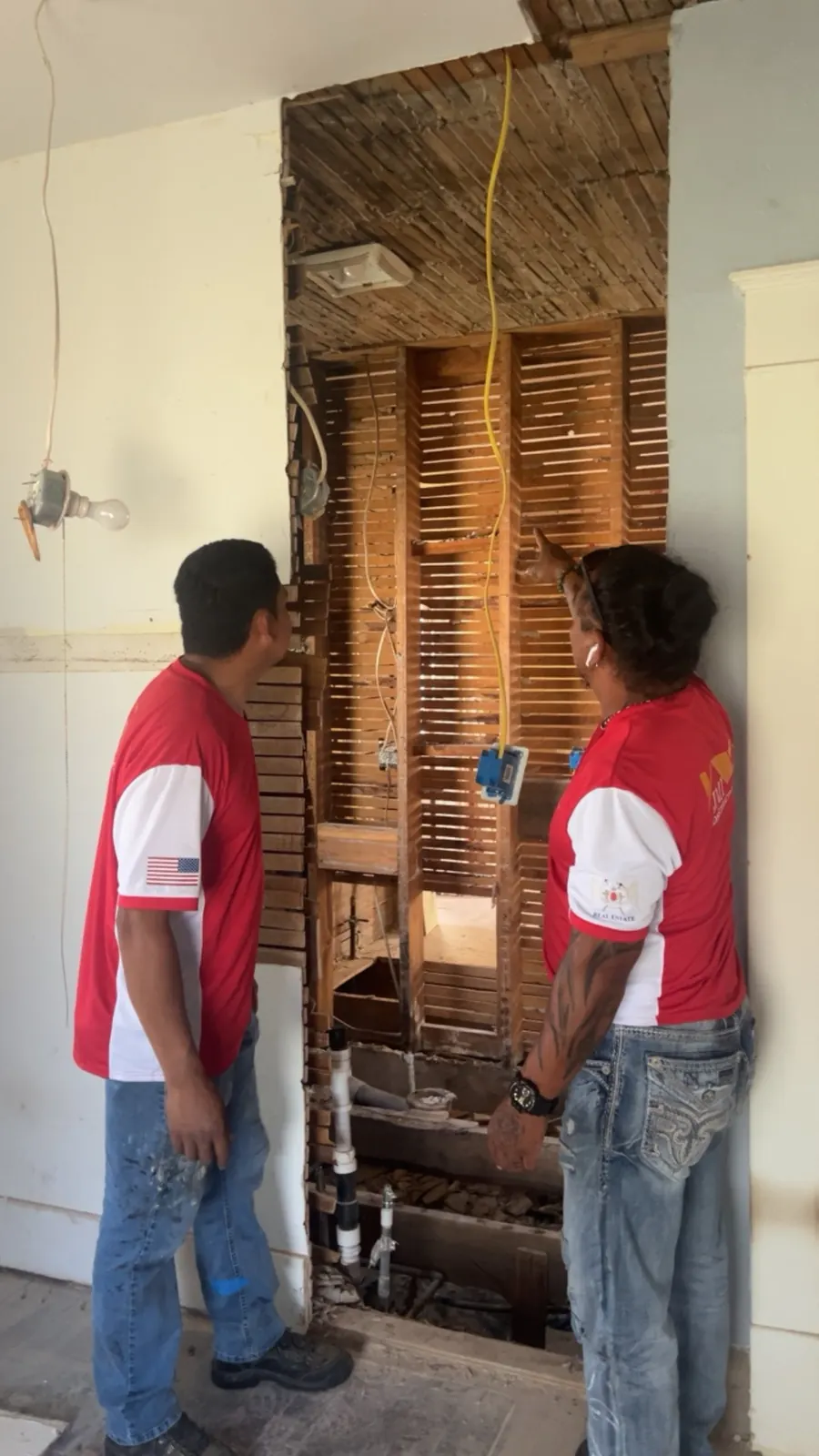
Sometimes a sticking door is a framing problem near the opening. Trey Terral, an architect, wrote in a Google review about JMI: "We had a sagging header that was compressing the sliding glass door below." A header is the beam over a door or window, and when it sags it presses down on the frame. In that case, Noah came to the house the day after the call and the crew diagnosed the problem and replaced the header. It's a good reminder that the cause is what matters, and finding it takes someone willing to look past the symptom.
What a structural assessment involves
An assessment looks at the whole picture: where the cracks are and how they run, how the doors and floors are behaving, how water moves around the house, and what's going on beneath it. The goal is to find the root cause and the extent of the damage before anybody proposes a fix. A repair plan that starts with a sales pitch for a product skips the most important step.
JMI Construction Group's foundation work starts with structural assessments with certified architects and engineers onsite. From there they plan the work, which can include crack repair, stabilization to prevent further settling, and drainage and waterproofing to address the water that often caused the problem. Their foundation page also lists a long-term warranty, so ask about the terms when you talk to them.
What to do this week
- Photograph each crack with a ruler beside it, and date the photo
- Mark the ends of each crack in pencil and check it monthly
- Walk the outside of the house and look at where the downspouts empty
- Note which doors and windows stick and in what weather
- If the pattern is getting worse, book an assessment instead of waiting
Waiting rarely makes a foundation problem cheaper to fix, and getting an answer is often a relief even when the answer is that nothing needs doing. If something in your house has you wondering, JMI Construction Group can send people out to look. See the foundation page at /foundation-repair or call (479) 544-2856.
JMI Construction Group LLC, (479) 544-2856
Call (479) 544-2856More articles
What to Do in the First 48 Hours After Hail or High Wind Hits Your Roof
The first two days after a storm decide how much damage you end up paying for, and most of the work happens before anyone climbs a ladder.
Why You Should Call a Contractor Before You File a Roof Insurance Claim
The first call you make after storm damage shapes everything that follows, and it works best when you already know what you're claiming.